Zep Mold and Mildew Stain Remover: Does It Work, and Where You Should Never Use It
Out of the Mold Editorial Team
Our guides are research-backed and cite EPA, CDC, and peer-reviewed sources. Product reviews are based on hands-on testing, not manufacturer claims. Read our editorial standards.
Affiliate Disclosure: Out of the Mold is reader-supported. As an Amazon Associate, we may earn a commission when you buy through links on this page — at no extra cost to you. Our picks are based on independent standards, manufacturer specifications, and published research, not commissions.
Key Takeaways
- Zep Mold Stain & Mildew Stain Remover is a bleach spray — sodium hypochlorite 3–5% per its SDS, a hair weaker than household bleach.
- It bleaches stains off sealed nonporous surfaces (tile, grout, glass, fiberglass) in minutes; it's the wrong product for porous drywall, bare wood, or any live moisture source.
- It's a stain remover, not an EPA-registered disinfectant — on porous materials it only whitens the surface while the colony regrows.
- Cross-shop: Zep ≈ Tilex (both cheap bathroom bleach), RMR-86 is the stronger eraser, Concrobium is the no-bleach pick for porous surfaces and regrowth control.
- Never mix it with ammonia or acidic cleaners (toxic gas); ventilate and wear gloves and eye protection.
Zep Mold Stain & Mildew Stain Remover is a bleach spray — sodium hypochlorite, around 3–5%. That one fact tells you everything: it bleaches mold and mildew stains out of hard, nonporous surfaces like tile, grout, fiberglass and sealed caulk in a couple of minutes with no scrubbing, and it is the wrong product for drywall, bare wood, or any mold with a live moisture source behind it — there it whitens the surface and the colony comes right back.
Search "zep mold and mildew" and you get a Reddit thread, a wall of Home Depot and Amazon listings, and no one actually telling you what the stuff is or where it fails. So here's the straight version. Zep's Safety Data Sheet lists the active ingredient as sodium hypochlorite at roughly 3–5% — a touch weaker than the 5.25% in a jug of laundry bleach. It's a legitimate, cheap, widely-stocked bleach stain remover. The trick is knowing that's what it is, because the label on the front says "mold and mildew" and lets you assume it fixes mold. It removes stains. Those are not the same job.
Where Zep works — and where you should never spray it
Bleach can't soak into a surface it can't penetrate, which is exactly why it's great on sealed surfaces and useless on porous ones. Buy by the surface, not the bottle:
| Surface | Zep? | Why |
|---|---|---|
| Glazed tile, glass, fiberglass tub/shower | ✅ Yes | Nonporous — the stain sits on top and bleaches off in minutes |
| Sealed grout and caulk | ✅ Yes | Works while the seal holds; re-seal or re-caulk if it keeps restaining |
| Painted, intact drywall (light spot) | ⚠️ Spot-test | Can lift paint; only a surface smudge, never water-damaged board |
| Bare drywall, bare wood, insulation | ⛔ No | Porous — bleach whitens the face, the roots and moisture survive, it regrows |
For the job it's built for — fast stain removal on hard nonporous surfaces — Zep is a fine, cheap pick. It's the budget option next to the pricier name-brand stain removers:
Zep Mold Stain & Mildew Stain Remover (32 oz)
Zep
$15–20 (multipack)
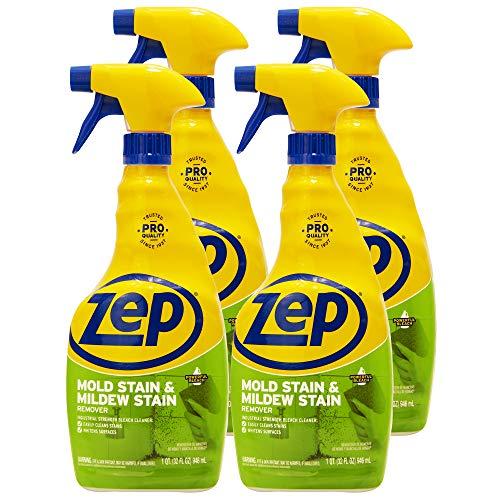
Zep Mold Stain & Mildew Stain Remover is a sodium-hypochlorite (bleach) spray that bleaches mold and mildew staining out of hard, nonporous surfaces in minutes. Its SDS lists 3–5% sodium hypochlorite — lower than the 5.25% in a jug of laundry bleach — so it behaves exactly like any bleach: fast on sealed surfaces, wrong for porous materials where the mold's roots and the moisture source survive.
Pros
- Bleach-based formula lifts surface mold and mildew stains in minutes with no scrubbing
- Cheap and widely stocked — the inexpensive big-box alternative to RMR-86 and Tilex
- Ready-to-use trigger spray; clings to vertical tile and grout
Cons
- It's sodium hypochlorite (3–5%) — a stain remover, not an EPA-registered disinfectant
- Useless on porous drywall, bare wood, or any active moisture source (regrows)
- Harsh chlorine fumes; never mix with ammonia or acidic cleaners
Why the hard line on porous materials? Bleach is mostly water. On drywall or bare wood the chlorine burns off at the surface while the water wicks intothe material and feeds the exact colony you were trying to kill. The EPA's own guidance on bleach says chlorine bleach "is not recommended as a routine practice during mold cleanup." We spell out the full chemistry in does bleach kill mold.
Zep vs the cleaners you might already have
Zep sits on the shelf next to four products people cross-shop it with. Here's how it actually stacks up:
- Zep vs RMR-86 — both are bleach-based stain removers. RMR-86 is the stronger, faster eraser for deep-set black staining on basement block and grout; Zep is cheaper and fine for routine bathroom mildew. If the stain is burned in, reach for RMR-86; for everyday grime, Zep saves money.
- Zep vs Tilex— nearly the same thing: a ready-to-use, cling-to-vertical bleach spray for bathroom surfaces. Pick on price and what's in stock; the Tilex write-up draws the identical porous-surface line.
- Zep vs Mold Armor — also bleach. The Mold Armor lineadds outdoor hose-end versions for siding and decks that Zep doesn't; indoors they're interchangeable.
- Zep vs Concrobium — the real alternative. Concrobium is notbleach: it works on a wider surface range, leaves a regrowth-inhibiting film, and is the better pick for porous materials or a home with kids and pets. It won't bleach out a set-in stain the way Zep does, but it actually helps keep mold from coming back.
If your problem is a stain Zep can't fully lift, RMR-86 is the heavier hammer:
RMR-86 Instant Mold & Mildew Stain Remover Spray (1 Gallon)
RMR Brands
$25–35
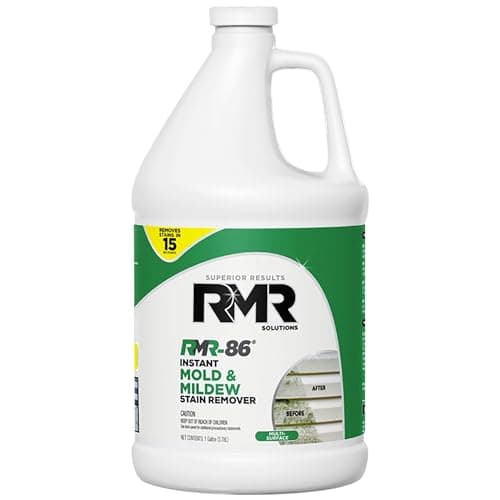
A fast-acting, commercial-strength mold stain remover that eliminates black mold stains on contact. The sodium hypochlorite formula penetrates porous surfaces to lift deep stains without scrubbing. Best used in well-ventilated areas with proper respiratory protection.
Pros
- Removes stains in as little as 15 seconds
- Works on wood, concrete, drywall, and tile
- No scrubbing required
Cons
- Strong bleach-based formula with harsh fumes
- Not safe for fabrics or colored surfaces
- Requires good ventilation and PPE
And if you can't use bleach — porous surface, or you want the mold to stay gone rather than vanish for a week — the no-bleach route is the smarter one:
Concrobium Mold Control (32 oz Spray, 2-Pack)
Concrobium
$34–40 (2 bottles)
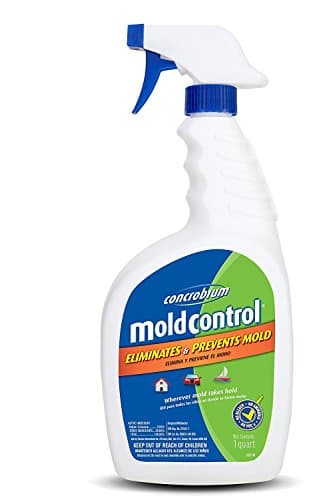
A patented, EPA-registered mold control solution that kills mold without bleach, ammonia, or VOCs. The tri-salt polymer formula crushes mold spores as it dries and leaves an invisible antimicrobial barrier to prevent regrowth. Safe for indoor use on virtually any surface.
Pros
- Non-toxic, no bleach or ammonia
- Kills mold and prevents regrowth
- Safe for use around children and pets
Cons
- Does not remove existing mold stains
- Takes longer to work than bleach-based products
- May require multiple applications for severe infestations
Our Tilex and Concrobium reviews, plus the mold stain remover and mold killer sprayrundowns compare the whole category head to head. For Zep's single best use case — shower tile and grout — see removing mold from a shower.
Does it kill the mold, or just remove the stain?
This is the honest heart of it. On a sealed, nonporous surface, bleaching the stain and killing the surface growth amount to the same thing — there's nowhere for the mold to hide. On a porous surface they don't: Zep is a stainremover, not an EPA-registered disinfectant, so on drywall or wood it lightens what you can see while the roots and the moisture source carry on underneath. Two weeks later the stain is back, and people blame the product when the real problem was the surface. If the mold keeps returning, it's telling you the water hasn't been fixed — that's a remediation job, covered in our mold removal guide.
The bleach safety rules the front label skips
Because it's bleach, the safety rules are bleach rules — and the shelf tag skips them:
- Never mix it with anything. Sodium hypochlorite plus an ammonia glass cleaner, or plus an acidic lime/rust remover, makes toxic chlorine gas. One product per session — the SDS is explicit about this.
- Ventilate. Open a window, run a fan. The cling formula keeps the chlorine smell hanging in a small bathroom.
- Gloves and eye protection. The SDS flags skin and serious eye irritation; a splash off glossy tile is how people actually get hurt with this stuff.
- Keep it off fabric and metal.It'll bleach a bath mat and can leave a temporary rust mark if it dwells on old fixtures — rinse touchy surfaces promptly.
Tried Zep and watched the mold come back? Tell us the surface — nine times out of ten it was porous, and that's the one thing no label on the bottle warns you about.
Frequently Asked Questions
Is Zep Mold and Mildew the same as bleach?
Will Zep kill mold on drywall?
Zep vs RMR-86 — which is better?
Related Articles
Does Bleach Kill Mold? The EPA Says No — Here's What Actually Works
Best Mold Stain Removers: RMR-86 vs the Rest
RMR-86 Review: Does It Really Remove Mold Stains?
Tilex Mold & Mildew Remover: Where It Works, Where It Doesn't
Mold Armor: What It Is, What's In the Line, and Where It Works
How to Remove Mold from Your Shower (Step-by-Step)
Dealing With Mold Right Now?
Our step-by-step mold removal guide walks you through testing your home, choosing the right products, and knowing when a job is too big for DIY.
Read the Removal Guide