Dehumidifier Smells Musty? Here's Which Part Is Actually the Problem
Out of the Mold Editorial Team
Our guides are research-backed and cite EPA, CDC, and peer-reviewed sources. Product reviews are based on hands-on testing, not manufacturer claims. Read our editorial standards.
Affiliate Disclosure: Out of the Mold is reader-supported. As an Amazon Associate, we may earn a commission when you buy through links on this page — at no extra cost to you. Our picks are based on independent standards, manufacturer specifications, and published research, not commissions.
Key Takeaways
- A musty dehumidifier is three problems: tank smell (fixable), coil smell (usually a replace), or a room-too-big smell (the unit isn't the culprit).
- Tank smell is strongest when you open the reservoir; coil smell blows out of the air outlet while the unit runs.
- White vinegar clears a tank smell; it can't reach coil biofilm behind the fan.
- If the room stays musty but the unit smells fine up close, it's undersized or the moisture source is elsewhere — a hygrometer confirms which.
- A coil smell that returns within days of a clean means the unit has become a spore emitter — replace it.
A musty dehumidifier is really three different problems, and which one you have decides whether cleaning will fix it. A smell strongest when you open the tank is biofilm in the reservoir — the easy, fixable case. A musty smell that blows out of the air outlet while the unit runsis mold on the evaporator coils, which tank-wiping never reaches. And a room that still smells musty with the dehumidifier running usually means the unit isn't the source at all — it's undersized or the real moisture source isn't being reached. Diagnose which one first; don't just scrub the bucket and hope.
Three Musty Smells, Three Different Problems
Every "my dehumidifier smells" article tells you to clean the tank. Sometimes that's the answer. Often it isn't — because the tank is rarely where the worst smell comes from. Before you clean anything, figure out which of these three you actually have. The quick way to tell them apart: stand near the air outlet with the unit running, then open the tank with it off, and notice which one carries the smell.
- Tank smell — strongest when you lift out and open the reservoir, faint or gone at the air outlet. Standing water plus a slick of biofilm in the bucket. This is the case cleaning solves.
- Coil smell — musty air pushes out of the outlet while the unit is running, even right after you emptied a clean-looking tank. Mold and bacterial biofilm have colonized the always-wet evaporator coils and the drain path behind the fan. Tank-wiping does nothing for this.
- Room smell— the dehumidifier itself smells fine up close, but the basement or room stays musty no matter how long it runs. The machine isn't the culprit; the moisture problem is bigger than the unit, or the smell is coming from somewhere the unit can't dry.
The coil smell is the one brand guides dodge, and it's the reason people say "I cleaned it and it still stinks." The coils stay cold and wet through every cycle, dust blows onto them, and if the unit doesn't dry out between runs, spores pulled from the room air bloom into colonies that release the musty VOCs you smell. Those surfaces are behind the fan housing — not where a rag reaches.
Fixing the Tank Smell (the case cleaning solves)
If the smell lives in the tank, this clears it:
- Unplug and pull the tank, float, and lid.
- Soak in undiluted white vinegar for 10–15 minutes, then scrub with a brush. Vinegar handles mold and biofilm on nonporous plastic without degrading the tank the way repeated bleaching does — the full vinegar-vs-bleach logic is here. For a greasy film that keeps coming back, step up to an EPA-registered cleaner (below) rather than reaching for bleach.
- Rinse or replace the air filterand wipe the intake grille — a dust-clogged filter is how the smell migrates from the tank toward the coils you can't reach.
- Dry everything completely before reassembly. A damp tank re-seeds overnight; this is the step that makes the fix stick.
Concrobium Mold Control
Concrobium
$10–15
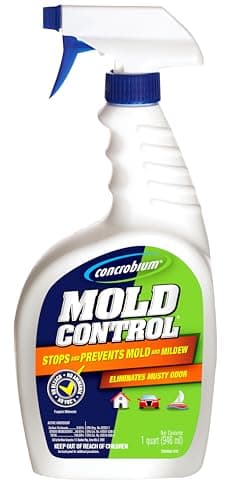
A patented, EPA-registered mold control solution that kills mold without bleach, ammonia, or VOCs. The tri-salt polymer formula crushes mold spores as it dries and leaves an invisible antimicrobial barrier to prevent regrowth. Safe for indoor use on virtually any surface.
Pros
- Non-toxic, no bleach or ammonia
- Kills mold and prevents regrowth
- Safe for use around children and pets
Cons
- Does not remove existing mold stains
- Takes longer to work than bleach-based products
- May require multiple applications for severe infestations
Fixing (or Not Fixing) the Coil Smell
This is the honest part. If the musty air comes out of the outlet while the unit runs, the colony is on the coils or in the drain path behind the fan, and you have limited options:
- Where the design allows, rinse the accessible coil face. Some units let you remove a back grille to reach the coil fins for a careful no-rinse coil-cleaner spray. Many don't — and forcing it risks bending fins or soaking electronics. If you can't reach the fins safely, don't.
- Run continuous drainage and auto-defrost.Standing water in the pan and drain path feeds the biofilm; a hose to a drain plus the unit's defrost cycle keeps those surfaces from sitting wet between runs.
The verdict:if a musty smell returns within a few days of a thorough clean, the biofilm is somewhere you can't reach, and the unit has become an emitter — it's now blowing spores into the room it was supposed to protect. That's the point to replace it, not keep cleaning. Our clean-vs-replace decision for a moldy dehumidifier gives you the flashlight test to confirm the coils are the problem before you spend on a new unit.
When the Room Still Smells (the machine isn't the culprit)
If the dehumidifier itself smells clean up close but the room stays musty, stop blaming the machine. Usually one of three things is going on:
- It's undersized.A 20-pint unit can't hold a damp basement below the humidity mold needs — it runs constantly and never gets there. Match pint capacity to the space; our dehumidifier for mold guide has the sizing.
- The humidistat is set too high or the space is open to outdoor air (vents, windows, an open bulkhead), so the unit can never win. Set it to 45–50% and close the space.
- The smell is coming from actual mold elsewhere— a wall cavity, carpet, or a slow leak the dehumidifier can't dry. That's a different hunt: start with tracking down a musty smell in the house.
A $10–15 hygrometer settles this fast. Put it at the far end of the space from the unit. If the dehumidifier reads 48% on its own display but the far corner reads 62%, you have an airflow or sizing problem — not a smelly-machine problem.
Govee H5075 Bluetooth Hygrometer Thermometer
Govee
$10–15
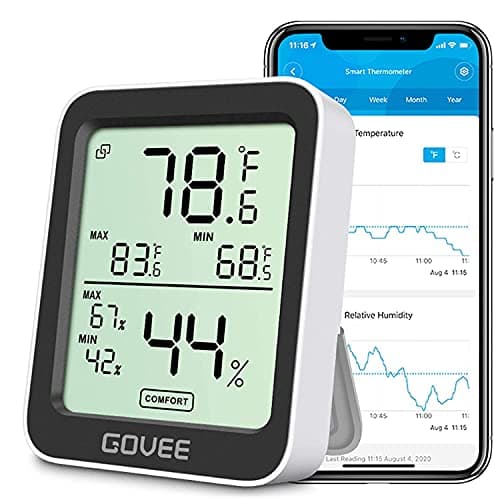
An inexpensive Bluetooth hygrometer that continuously tracks a room's relative humidity and temperature and graphs the history in an app. Mold needs sustained humidity above roughly 60%, so a logging hygrometer in the bathroom, basement, or a closet is the cheapest way to see a moisture problem building before mold appears. It monitors conditions — it does not detect or identify mold itself.
Pros
- Logs humidity history so you can spot rooms that creep past 60% RH
- Bluetooth app graphs the trend and alerts you when a room gets damp
- Cheap enough to put one in every mold-prone room
Cons
- Measures humidity, not mold — it flags the conditions, never confirms spores
- App/Bluetooth only; no Wi-Fi remote access without the hub
- Consumer-grade accuracy — fine for mold risk, not lab precision
Preventing Musty Smell From Coming Back
Whichever smell you had, the same habits keep it gone:
- Never store the unit wet— run it empty for an hour at season's end, dry the tank, store with the lid off.
- Empty and dry the tank between cycles instead of letting water stand.
- Clean the filter monthlyduring heavy use so dust doesn't reach the coils.
- Keep the room below 50% RH — well under the EPA's below-60% (ideally 30–50%) range — so the machine isn't running waterlogged around the clock.
If the smell was the coils and you're replacing the unit, buy one sized for the space with a continuous-drain port or built-in pump, so the tank isn't sitting full and the coils aren't perpetually wet. These three cover most homes (editorial price ranges, not live Amazon prices):
| Product | Rating | Price | Best For | Link |
|---|---|---|---|---|
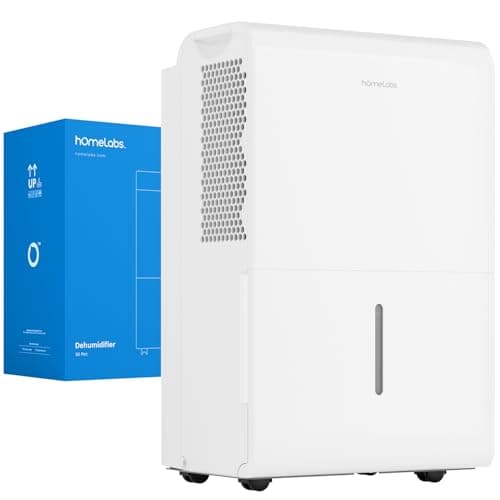 hOmeLabs 50-Pint Energy Star Dehumidifier hOmeLabs Best Overall | $220–260 | Whole-basement and large-room mold prevention at the best price-to-capacity ratio | View | |
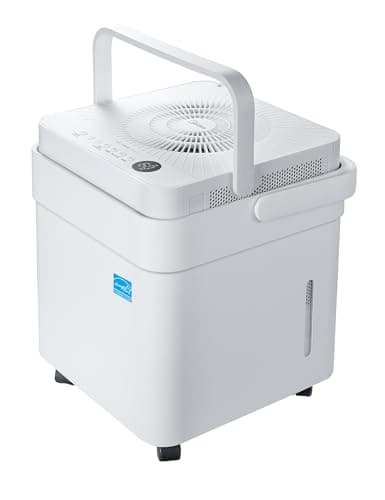 Midea Cube 50-Pint Smart Dehumidifier with Pump Midea No Floor Drain? Built-in Pump | 4.4 | $270–320 | Basements without a floor drain, or anyone who wants remote humidity monitoring | View |
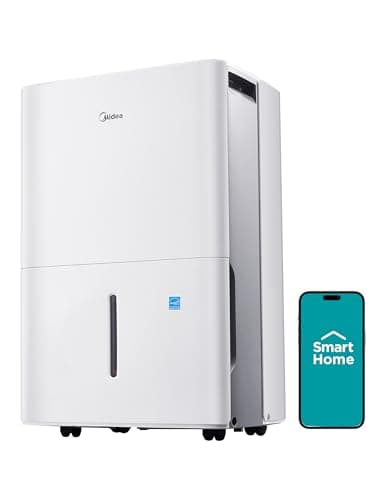 Midea 50-Pint Energy Star Dehumidifier Midea Best Value | 4.4 | $180–220 | Budget-conscious buyers who still need full 50-pint capacity | View |
Smell Keeps Coming Back After a Clean?
That's the tell that the mold is on the coils, not the tank — which means the clean-vs-replace call, not another scrub. Run the flashlight test and know for sure before you spend a dollar.
Clean It or Replace It? The 30-Second Test →Frequently Asked Questions
Why does my dehumidifier smell musty when it's running?
Can I put vinegar in the dehumidifier tank to stop the smell?
My dehumidifier smells like burning, not musty — what's that?
Should I replace a dehumidifier that smells musty?
Related Articles
Black Mold in Your Dehumidifier? First Decide: Clean It or Replace It
Best Dehumidifiers for Mold Prevention & Removal (2026)
Musty Smell in House? Here's How to Find & Fix the Source
Does Vinegar Kill Mold? The Science, the Limits, and How to Use It Right
How to Get Rid of Mold in Your Basement (2026 Guide)
Best Air Purifiers for Mold Spores & Musty Odors (2026)
Dealing With Mold Right Now?
Our step-by-step mold removal guide walks you through testing your home, choosing the right products, and knowing when a job is too big for DIY.
Read the Removal Guide