Mold Allergy & Exposure Symptoms: What the Evidence Actually Shows
Out of the Mold Editorial Team
Our guides are research-backed and cite EPA, CDC, and peer-reviewed sources. Product reviews are based on hands-on testing, not manufacturer claims. Read our editorial standards.
Affiliate Disclosure: Out of the Mold is reader-supported. As an Amazon Associate, we may earn a commission when you buy through links on this page — at no extra cost to you. Our picks are based on independent standards, manufacturer specifications, and published research, not commissions.
Key Takeaways
- The CDC's core mold symptoms are a stuffy nose, sore throat, coughing or wheezing, burning eyes, and skin rash.
- Most mold reactions are allergic or irritant — not "toxic mold" poisoning; the feared black-mold/pulmonary-hemorrhage link has not been proven by the CDC.
- An estimated 4.6 million U.S. asthma cases (~21%, range 12–29%) are attributable to home dampness and mold (Berkeley Lab/EPA).
- The CDC does not recommend mold testing to decide whether mold is making you sick; the "leave and return" pattern and a doctor's allergy test are more useful.
- The fix is removing the mold and its moisture — the EPA stresses dead mold still triggers allergies, so it must be removed, not just killed. This page isn't medical advice.
The most common mold symptoms are the allergy-type ones the CDC lists: "stuffy nose, sore throat, coughing or wheezing, burning eyes, or skin rash." For people with asthma or a mold allergy, exposure can trigger more severe reactions, and people who are immune-compromised or have chronic lung disease can develop lung infections. Most mold reactions are allergic or irritant responses — not the dramatic "toxic mold" poisoning the internet tends to describe. This page explains what the EPA, CDC, and the peer-reviewed research actually say, and where the evidence stops. It is not medical advice — if you're having symptoms, talk to a healthcare provider.
Three Ways Mold Affects Health
The EPA frames mold's health effects in three categories, and keeping them straight is the fastest way to cut through the fear online. According to the EPA, "molds produce allergens (substances that can cause allergic reactions), irritants, and in some cases, potentially toxic substances (mycotoxins)."
- Allergenic— by far the most common. Your immune system reacts to spores the way it reacts to pollen. The EPA notes these reactions "can be immediate or delayed."
- Irritant — spores and the musty VOCs mold gives off can irritate eyes, nose, throat, and lungs even without a true allergy.
- Toxigenic— some molds can produce mycotoxins under some conditions. This is the real but narrow category the "toxic mold" headlines inflate (more below).
The Symptoms, by Where You Feel Them
The CDC's core list is short: "stuffy nose, sore throat, coughing or wheezing, burning eyes, or skin rash." Grouped by where people notice them:
- Nose and throat: congestion, sneezing, runny or itchy nose, sore throat.
- Chest and lungs: coughing and wheezing. In people with asthma, the CDC adds chest tightness and shortness of breath.
- Eyes: burning, watery, itchy, or red eyes.
- Skin: rash or irritation on contact.
You'll see sites list headaches, fatigue, and "brain fog" too. Those appear in a lot of personal accounts, but they aren't in the CDC's or EPA's core symptom descriptions — so treat them as reported-but-not-established, and bring them to a doctor rather than self-diagnosing mold as the cause.
The Mold–Asthma Connection (What's Proven)
This is the best-established health link, and it's worth stating precisely. In 2004 the Institute of Medicine found there was "sufficient evidence to link indoor exposure to mold with asthma symptoms in people with asthma." The CDC adds that more recent studies "suggested a potential link of early mold exposure to development of asthma in some children, particularly among children who may be genetically susceptible."
The scale is larger than most people realize. A Berkeley Lab and EPA analysis (Mudarri & Fisk, published in the journal Indoor Air) estimated that about 4.6 million cases of current U.S. asthma — roughly 21%, with a range of 12–29% — are attributable to dampness and mold in the home. (Source: Lawrence Berkeley National Laboratory.)
"Black Mold" and Mycotoxins: What the Evidence Shows
Search "black mold" and you'll find claims of memory loss, bleeding lungs, and worse pinned on Stachybotrys chartarum. The honest version, from the CDC itself: the feared link between Stachybotrysand acute pulmonary hemorrhage in infants — the case that launched the "toxic black mold" panic in the 1990s — was investigated and "has not been proven." The CDC later identified methodological problems in the original study and retracted its initial conclusion. As the agency puts it, "at present, no test exists that proves an association between Stachybotrys chartarumand particular health symptoms."
That is not a license to ignore it. The same CDC page is blunt about what to do: "if Stachybotrys chartarumor other molds are found in a building they should be removed." Black mold isn't a uniquely lethal species — it's mold, and all indoor mold warrants removal. The species matters far less than the amount and whether you're reacting to it. Our black mold removal guide covers the actual cleanup.
Who Reacts Most
The CDC and EPA both single out groups more likely to react, or react severely:
- People with asthma or a mold allergy— "may have severe reactions," per the CDC.
- Immune-compromised people and those with chronic lung disease— the CDC warns they "may get infections" in the lungs from mold.
- Children — the early-exposure asthma-development link the CDC describes centers on kids, particularly those who may be genetically susceptible.
Is Mold Actually Causing Your Symptoms?
Here's a point most mold sites bury because it undercuts a sale: the CDC does not recommend mold testingto figure out whether mold is making you sick, because "you cannot rely on sampling and culturing to know whether someone might become sick." No home test tells you your health risk. What actually helps pin it down:
- The "leave and return" pattern.If symptoms ease when you're away from home and return when you're back, that's a stronger real-world signal than any kit.
- Medical allergy testing.A skin-prick or blood (IgE) test ordered by a doctor can confirm a mold allergy specifically — that's the medical side, not something a home kit does.
- Home mold testing has a narrow, honest use: confirmingwhether and whereyou have a mold problem when you can't see it, or verifying a cleanup worked — not diagnosing illness.
My Mold Detective MMD103 Multi-Room Mold Test Kit
My Mold Detective
$40–50
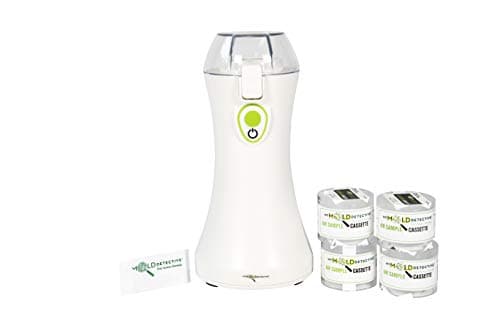
A multi-room air sampling kit that uses cassette-style collectors for more accurate spore counts than settling plates. Lab analysis is included in the purchase price, and results are delivered via email with a detailed breakdown of mold species and concentration levels.
Pros
- Tests up to 3 rooms in a single kit
- Lab analysis included in the price
- Uses cassette-style air sampling for professional-grade results
Cons
- Requires a box fan or pump for air sampling
- More complex setup than settling-plate kits
- Results take 3-5 business days
If you're deciding whether a test is even worth it, our guide to mold test kits and the ERMI-vs-air-test comparisonlay out what each method can and can't tell you.
What Actually Helps: Fix the Source
Every authority lands in the same place: reduce exposure by removing the mold and the moisture feeding it. A detail people miss — the EPA stresses that "dead mold may still cause allergic reactions in some people, so it is not enough to simply kill the mold, it must also be removed." Spraying a biocide and walking away doesn't end the allergy trigger.
- Find and fix the moisture. No moisture, no mold. Start with our mold removal guide and humidity control (the EPA target is below 60%, ideally 30–50%).
- Remove the mold, don't just kill it. Clean small areas yourself; for anything over about 10 square feet or inside walls, bring in a professional.
- Reduce airborne spores while you work.A HEPA air purifier captures circulating spores — it doesn't treat symptoms or replace fixing the source, but it lowers the exposure in the room while you deal with the cause.
LEVOIT Core 400S Smart True HEPA Air Purifier
Levoit
$190–240
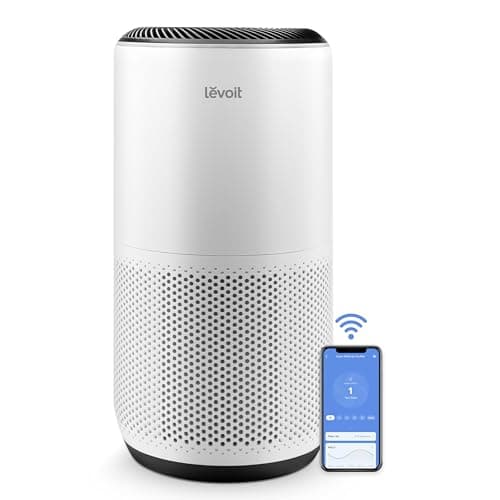
Levoit's large-room workhorse. The 360-degree intake and H13 HEPA move a lot of air — enough to cycle a 1,733 sq ft basement several times an hour on high — and the VeSync app surfaces a real PM2.5 number so you can watch spore-laden dust drop after you clean. Pair it with a dehumidifier and it's the closest thing to a permanent air-quality fix for a chronically damp lower level.
Pros
- Rated for large open spaces up to 1,733 sq ft — good for basements and finished lower levels
- H13 True HEPA plus a high-capacity activated-carbon layer for musty basements
- App shows a live PM2.5 reading and lets you schedule/auto-run 24/7
Cons
- Filter is a single combined unit — the whole thing gets replaced (~$50 every 6–8 months in a damp space)
- Physically large; not a discreet bedroom unit
- Wi-Fi setup can be finicky on 5 GHz-only networks
For the device side of exposure reduction, see our best HEPA air purifiers for mold roundup. And again, the honest caveat that runs through this whole page: a purifier and a clean house reduce exposure; they are not a diagnosis and not a treatment. For the health side, the EPA and CDC are the authorities, and your doctor is who to see about symptoms.
Frequently Asked Questions
How quickly do mold allergy symptoms appear?
Can mold make you permanently sick?
What are the most common mold allergy symptoms?
Is black mold more dangerous than other mold?
Related Articles
Best Air Purifiers for Mold Spores & Musty Odors (2026)
Best Mold Test Kits for Home Use: What Works & What's a Waste of Money (2026)
ERMI vs Air Test vs HERTSMI-2: Which Mold Test Do You Need?
How to Get Rid of Black Mold: DIY Removal Guide
Best Mold Removal Products: What Works for Every Surface & Situation
What Does Mold Smell Like? How to Identify Mold by Smell
Dealing With Mold Right Now?
Our step-by-step mold removal guide walks you through testing your home, choosing the right products, and knowing when a job is too big for DIY.
Read the Removal Guide