Best Dehumidifier for Basement (2026): Sizing by Dampness, Cold-Running & Continuous Drain
Out of the Mold Editorial Team
Our guides are research-backed and cite EPA, CDC, and peer-reviewed sources. Product reviews are based on hands-on testing, not manufacturer claims. Read our editorial standards.
Affiliate Disclosure: Out of the Mold is reader-supported. As an Amazon Associate, we may earn a commission when you buy through links on this page — at no extra cost to you. Our picks are based on independent standards, manufacturer specifications, and published research, not commissions.
Key Takeaways
- Three basement-only decisions beat brand or box size: cold-running, self-draining, and real (post-2019-DOE) capacity.
- The 2019 DOE test change dropped ratings ~30% — a new '50-pint' pulls about what an old 70-pint did, so don't under-buy off an old number.
- A gravity hose works only if a drain sits below the unit; otherwise use a built-in or add-on condensate pump so you never empty a bucket.
- Buy a low-temp, auto-defrost unit for cold or large basements; a compact thermoelectric unit is only for a closet-sized enclosed spot.
- The goal is RH 30–50% (EPA): hold a basement under 50% and mold can't start — but a dehumidifier is prevention, not a fix for liquid leaks or existing mold.
For most basements, a modern 50-pint dehumidifier with continuous-drain (a gravity hose or a built-in pump) and low-temperature operation is the right buy. Size up to a large-capacity unit if the space is over ~1,500 sq ft, floods, or stays below about 65°F. The three things that actually decide a basement dehumidifier — and that whole-house roundups skip — are whether it keeps running in the cold, how it drains without you emptying a bucket, and how many pints it really pulls after the 2019 DOE rating change.
Nearly every "best dehumidifier" list is a whole-house roundup that treats "basement" as a tag on one unit. A basement is its own problem: it runs cold, it has no one standing there to empty a bucket, and the pint number on the box doesn't mean what it meant five years ago. Get those three right and the unit practically disappears into the mechanical room doing its job. Get them wrong and you own a cold-stalled, bucket-filling paperweight. Here are our picks and the reasoning behind each one.
The three basement-specific decisions
Before capacity, before brand, these are the choices that separate a basement unit from a bedroom one:
- Will it run in the cold? Basements sit cooler than the rest of the house, and most compressor dehumidifiers frost up and stall somewhere around 41–45°F. If your basement drops into the low 60s or colder in winter, you need a unit rated for low-temperature operation with automatic defrost — not a bedroom model that ices its coil solid.
- How does it drain without you?Nobody walks downstairs twice a day to empty a 1.6-gallon bucket. You want continuous drainage: a gravity hose to a floor drain if one sits below the unit, or a pump if the water has to travel up to a sink or window. This single decision is why people "hate" their dehumidifier — a bucket you forget overflows, and a damp basement stays damp.
- How many pints is it really? In 2019 the Department of Energy changed how dehumidifiers are tested — from an 80°F room to a cooler 65°F test condition, closer to real basement air. The practical result: ratings dropped by roughly 30%, so a new "50-pint" removes about as much water as an old 70-pint. Don't under-buy by comparing a 2026 unit to a number you remember from 2017.
Our basement dehumidifier picks
Four picks, each for a specific basement situation. Start here and match the unit to your space and your drain.
The one most basements should buy. A 50-pint (new DOE rating) workhorse with a built-in humidistat and a continuous gravity-drain port. Set it to hold ~45–50% relative humidity and walk away. This is the best capacity-per-dollar pick for a standard, moderately-to-very damp basement with a floor drain below it:
hOmeLabs 50-Pint Energy Star Dehumidifier
hOmeLabs
$220–260
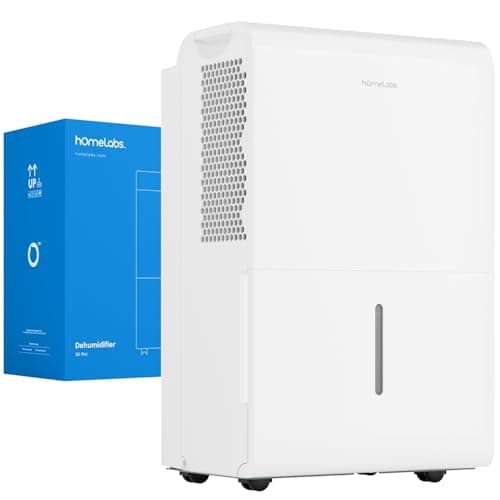
The best-selling 50-pint dehumidifier on Amazon and our top overall pick for mold prevention. Set your target humidity (aim for 45-50%) and the built-in humidistat cycles the compressor to hold it. A rear hose port allows continuous gravity draining into a floor drain, and turbo mode speeds up moisture removal after water events. Energy Star certified to keep 24/7 running costs reasonable.
Pros
- 50-pint capacity handles basements and large rooms up to 4,500 sq ft
- Built-in humidistat holds your target humidity automatically
- Continuous-drain hose port for set-and-forget operation
Cons
- No built-in pump — gravity drain or bucket emptying only
- 1.6-gallon bucket fills every 6-8 hours in very damp spaces
- Fan is audible on turbo mode
For a cold or large below-grade basement.If your space stays genuinely cold in winter, or it's big, or it occasionally takes on water, a consumer portable will frost up and quit. A commercial-grade low-temp unit with hot-gas auto defrost keeps running down to the high 30s and moves far more water per day. It costs more — but it's the unit that doesn't die in February:
AlorAir Sentinel HD55S Crawl Space Dehumidifier
AlorAir
$450–550
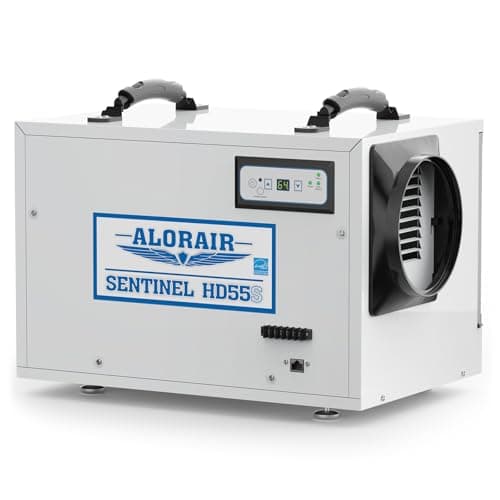
A commercial-grade crawl space dehumidifier engineered for the low temperatures and horizontal clearances portable units can't handle. Hot-gas auto defrost keeps it running down to 36°F, and its epoxy-coated coils resist the corrosion that kills consumer units in damp crawl spaces. The standard choice for crawl space moisture control after encapsulation.
Pros
- Purpose-built for crawl spaces — operates down to 36°F with auto defrost
- 120 pints per day saturation capacity, Energy Star certified
- 5-year warranty and ductable design for sealed installs
Cons
- Significant investment compared to portable units
- Gravity drain only on this model — pump version costs more
- Requires proper crawl space placement and clearance
For a small enclosed damp spot, not a whole basement.A compact thermoelectric unit is the honest pick only for a closet, a bathroom, or a tiny finished nook inside the basement — it's quiet and cheap, but it won't dry out an open basement and it loses effectiveness below about 59°F. Don't buy this expecting it to handle the whole floor:
Pro Breeze Electric Mini Dehumidifier
Pro Breeze
$35–50
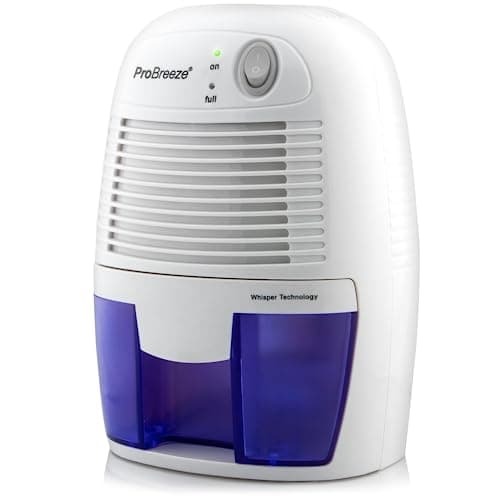
A compact thermoelectric (Peltier) dehumidifier for small enclosed spaces prone to condensation and musty smells. It won't dry out a basement, but for a windowless bathroom, closet, or boat cabin it quietly pulls enough moisture to keep surfaces below the humidity mold needs. No compressor means near-silent operation and low power draw.
Pros
- Whisper-quiet thermoelectric design with no compressor
- Small footprint fits bathrooms, closets, and RVs
- Auto shut-off with indicator when the tank is full
Cons
- Only effective in small spaces up to ~215 sq ft
- Thermoelectric units lose effectiveness below about 59°F
- 17-ounce tank needs frequent emptying in damp rooms
If there's no floor drain: pump vs built-in pump
The "no floor drain" problem has two honest answers. One is to buy a 50-pint unit with a built-inpump — the Midea Cube 50-pint is the common pick, and it lifts its own condensate up to a sink or window without an add-on. The other, cheaper, route is to keep a gravity-only unit like our top pick and add a small automatic condensate pump: run the dehumidifier's drain hose into the pump, and it pushes the water up and out for you.
Automatic Condensate Pump for Dehumidifiers
Stropum
$25–35
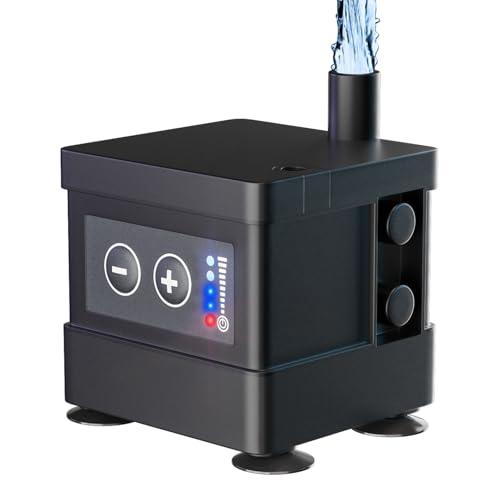
A small automatic pump that solves the one problem every basement dehumidifier buyer hits: where does the water go when there's no floor drain below the unit? Run the dehumidifier's drain hose into the pump reservoir and it lifts the condensate up to ~16 feet, out to a utility sink, standpipe, or window — so a gravity-only unit becomes true set-and-forget instead of a bucket you empty twice a day.
Pros
- Pushes dehumidifier water up and out — drain into a sink or window when there's no floor drain
- Up to ~16 ft of lift; automatic float switch turns it on and off
- Lets you leave a gravity-only dehumidifier running without emptying a bucket
Cons
- One more thing that can clog — flush it a couple of times a year
- Needs an outlet near the unit
- Not necessary if your dehumidifier already has a built-in pump or a downhill floor drain
One winter caution either way: don't run a drain hose across an unheated space where it can freeze, and flush a pump a couple of times a year so grit doesn't clog the float.
Sizing it: square footage and dampness together
Capacity is a function of two things, not one — how big the space is and how wet it is. Use the manufacturer's square-footage rating as the ceiling, then size up for dampness:
| How the basement feels | What it means | Rough target |
|---|---|---|
| Moderately damp | Musty smell in humid weather, no visible water | A 50-pint (new rating) for up to ~1,500 sq ft |
| Very damp | Damp spots on walls/floor, clammy feel year-round | A 50-pint for smaller spaces; size up past ~1,200 sq ft |
| Wet / seepage | Visible moisture, occasional standing water after rain | A large-capacity / low-temp unit, regardless of size |
When you're between sizes, go bigger. An oversized unit runs in shorter cycles and holds your target humidity more steadily; an undersized one runs nonstop and still loses ground on the worst days. If you're not sure how damp the space actually is, a cheap moisture meteror hygrometer settles it before you spend — measure, don't guess.
The point of all this: under 50% humidity, mold can't start
A basement dehumidifier isn't a gadget — it's mold prevention. Mold needs moisture, and the EPA's guidance on mold and moisture is to keep indoor relative humidity below 60% — ideally 30–50%. Hold a basement at 45–50% and you've taken away the one thing mold can't grow without. That's the whole job: the unit runs, the humidity stays down, and the musty-basement spiral never starts.
Two honest boundaries. First, a dehumidifier manages humidity in the air; it does not stop liquid water coming through a cracked wall or a failed drain — fix the water source too. Second, if mold is alreadygrowing down there, drying the air won't remove what's on the surfaces. That's remediation, and our basement mold removalguide walks the cleanup and the EPA's ~10-square-foot DIY-versus-pro line. For the mold-specific side of choosing a unit — species, spore counts, placement — see our dehumidifier for moldguide, and if you're weighing the cost of DIY moisture control against calling someone, the mold removal cost breakdown puts real numbers on both. Cold crawl space instead of a basement? The sizing logic shifts — see crawl space dehumidifier.
Bought a unit and still fighting dampness? Tell us the reading your hygrometer settles at and whether the drain runs continuously — nine times out of ten the problem is a bucket nobody empties or a unit a size too small for how wet the space really is.
Frequently Asked Questions
What size dehumidifier for a 1,000 sq ft basement?
Will a dehumidifier work in a cold basement?
Do I need a dehumidifier with a pump?
Related Articles
Best Dehumidifiers for Mold Prevention & Removal (2026)
How to Get Rid of Mold in Your Basement (2026 Guide)
Best Crawl Space Dehumidifiers That Actually Work (2026)
Moisture Meter for Mold: Finding Hidden Mold Before You See It
Dehumidifier for Mold Prevention: What Humidity to Hold and How to Set It Up
Best Mold Fogger & Mold Bomb: Machines, Solutions & Safety Guide (2026)
Dealing With Mold Right Now?
Our step-by-step mold removal guide walks you through testing your home, choosing the right products, and knowing when a job is too big for DIY.
Read the Removal Guide