UV Light for Mold: Does It Actually Work (and Where It's Just Hype)
Out of the Mold Editorial Team
Our guides are research-backed and cite EPA, CDC, and peer-reviewed sources. Product reviews are based on hands-on testing, not manufacturer claims. Read our editorial standards.
Affiliate Disclosure: Out of the Mold is reader-supported. As an Amazon Associate, we may earn a commission when you buy through links on this page — at no extra cost to you. Our picks are based on independent standards, manufacturer specifications, and published research, not commissions.
Key Takeaways
- UV-C kills mold only where the light directly shines, long enough: the dose is intensity × exposure time, so direct line-of-sight and dwell time are everything.
- The real home use case is the HVAC evaporator coil and drain pan — a continuous, ASHRAE- and EPA-recognized application. Inside air purifiers, the HEPA filter does nearly all the work.
- The EPA says typical home UVGI units have 'limited effectiveness in killing bacteria and molds' because spores need far more exposure than a home unit delivers.
- Whole-house, behind-the-wall, and across-the-room mold claims are hype — UV-C can't reach what it can't shine on, and it never fixes the moisture source.
- Choose ozone-free 254nm lamps (the EPA warns inhaled ozone 'can damage the lungs'), and never run an exposed UV-C fixture in an occupied room — it's an eye and skin hazard.
UV-C light can kill mold — but only where the light actually hits it, long enough. That makes it genuinely useful on an HVAC evaporator coil and inside an air purifier, and close to useless for mold behind drywall, in carpet, or floating across a room. The dose that kills a spore is intensity × exposure time, and the EPA is blunt that "typical UVGI cleaners used in homes have limited effectiveness in killing bacteria and molds" because effective destruction "usually requires much higher UV exposure than is provided in a typical home unit." If a product promises whole-house mold control from one bulb, that's the hype.
The UV-light-for-mold market is a fight between two things: HVAC companies selling you a coil lamp, and forum threads insisting the lamps do nothing. Both are partly right, and nobody independent reconciles them. The honest answer turns on one idea — dose — so start there.
Where UV-C actually kills mold
Germicidal UV-C (the 254-nanometer kind) damages the DNA of mold, so it can't reproduce. But it only works on what it directly shines on, and only if the light lingers long enough. Both ASHRAE and the EPA recognize coil sterilization as a legitimate use for exactly that reason: the evaporator coil and drain pan inside your air handler are cold, permanently damp, and the UV-C lamp can sit right on top of them, running continuously. Direct line of sight plus unlimited dwell time is the one combination where a home UV-C lamp genuinely earns its keep.
The other spot that works is inside a device built around the lamp — an air purifier or scrubber chamber where the airflow is slowed and routed close to a strong bulb. Even there, the dose matters: in most consumer air purifiers the air rushes past the lamp too fast for the UV-C to do much, and the HEPA filter is doing nearly all of the real work (we say so plainly in our best air purifier for mold picks). Treat UV-C in a purifier as a minor bonus, not the reason to buy.
Where UV light is just hype
UV-C does not bend around corners, pass through opaque material, or reach across a room with any useful dose. So every one of these claims is marketing:
- "Kills mold behind your walls."The light can't reach it. Mold in drywall, framing, or insulation is a moisture-and-removal problem, full stop.
- "Whole-house mold control from one bulb." A lamp in the duct treats the sliver of air passing within inches of it for a fraction of a second — not the house.
- "A UV air purifier that eliminates mold." The HEPA filter captures the spores; the UV is along for the ride.
- UV as a substitute for fixing the leak.Nothing kills mold faster than it regrows if the material stays wet. UV-C doesn't touch the moisture source.
This is why the forums are full of "added a UV light, didn't seem to do anything." They're usually right — because the lamp was sold as a room or whole-house cure, which it isn't.
UV light buyer's guide, by use case
| Use case | What to get | Worth it? |
|---|---|---|
| Mold/biofilm on the AC evaporator coil & drain pan | In-duct 254nm UV-C coil lamp (ozone-free) | ✅ Yes — the real use case |
| Room air during/after remediation | A sealed HEPA purifier (UV is a bonus, not the point) | ✅ Buy for the HEPA |
| Damp crawl space | Fix moisture first (dehumidifier/encapsulation); UV is secondary | ⚠️ Moisture first |
| Mold behind walls / in carpet / across a room | None — UV can't reach it | ⛔ Don't buy for this |
If you've got recurring mold or biofilm on the AC coil — the classic musty smell that hits when the air kicks on — an in-duct coil lamp is the one UV-C purchase that lines up with what ASHRAE and the EPA actually support. Buy a 254nm, ozone-free model and mount it sealed inside the air handler aimed at the coil:
COOSPIDER 9W HVAC UV Light — In-Duct UV-C Lamp for AC Coil & Whole House
COOSPIDER
$35–45
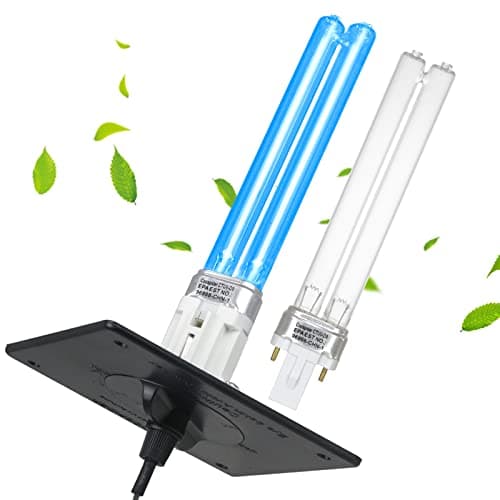
An in-duct germicidal UV-C lamp that mounts inside the air handler to bathe the evaporator coil and drain pan — the cold, perpetually damp spot where HVAC mold and biofilm actually grow. Because it sits right on the coil and runs continuously, it delivers the direct exposure and dwell time UV-C needs, which is the coil-sterilization application ASHRAE and the EPA recognize. It does not treat room air meaningfully and does nothing for mold the lamp can't directly reach.
Pros
- Mounts in the air handler to keep a UV-C dose on the evaporator coil and drain pan — the one home spot UV-C genuinely helps
- Coil/drain-pan sterilization is the UV-C use case ASHRAE and the EPA actually support
- Simple install near the coil; runs continuously so dwell time isn't the problem it is for in-duct air
Cons
- Does nothing for mold behind walls, in carpet, or anywhere the lamp can't directly shine
- Not a substitute for fixing the moisture source or for filtration
- UV-C is an eye/skin hazard — only run it sealed inside the duct, never exposed
A warning on ozone: some UV lamps (the 185nm kind) deliberately produce ozone and market it as extra "sanitizing." Skip those. The EPA is clear that "when inhaled, ozone can damage the lungs" and that ozone generators sold as air cleaners "have little potential to remove indoor air contaminants" — see its guidance on ozone generators. Stick to ozone-free 254nm. For the actual coil-cleaning job the lamp supports, pair it with the duct cleanup in our mold in air ductsguide, and run a real HEPA for the room air UV-C can't clean:
For the room-air side, our mold air purifier and black mold air purifier guides cover which HEPA units actually move enough air, and the crawl space dehumidifier guide is the right first move when the problem is a damp crawl space rather than the coil.
UV light for mold detection is a different tool
There's a second, unrelated reason people buy a UV light for mold: to find it. A 365nm blacklight (not germicidal UV-C) makes a lot of mold staining, old water tracks, and residue fluoresce in a dark room, which helps you spot where to look behind furniture or along a baseboard.
The honest limit: a blacklight is suggestive, not diagnostic. It lights up plenty of non-mold stuff — mineral deposits, cleaning residue, lint, pet urine — and some molds don't fluoresce at all. So use it to decide where to investigate, then confirm anything it flags with an actual mold test kit. For scouting in a darkened room, a rechargeable 365nm light with a tight beam does the job:
TrixHub 365nm UV Blacklight Flashlight (Rechargeable, LCD)
TrixHub
$18–25
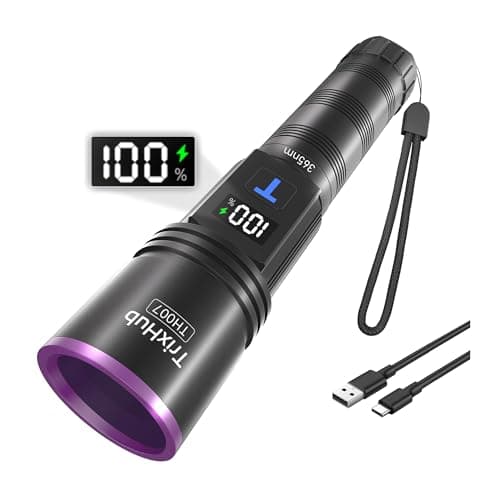
A 365nm UV blacklight flashlight for scanning a darkened room so staining, moisture tracks, and some mold growth fluoresce and stand out. It is a scouting tool, not a diagnostic one: plenty of non-mold residue also glows and some molds don't fluoresce at all, so treat anything it highlights as a place to investigate and confirm with a mold test rather than a positive ID.
Pros
- 365nm blacklight makes many mold stains, water tracks, and pet-urine residue fluoresce in a dark room
- Rechargeable with a usefully tight, bright beam for scanning walls, grout, and subfloors
- Cheap way to find where to look before you spend on a lab test
Cons
- Suggestive, not diagnostic — it lights up plenty of harmless stuff and misses some mold
- Only useful in a fully darkened room, and not on every mold species
- Confirm anything it flags with an actual mold test
The safety line you can't skip
Germicidal UV-C is harmful to eyes and skin — the same property that damages a spore's DNA damages yours. A coil lamp is only safe because it's sealed inside the duct where the beam never reaches you; never run an exposed UV-C fixture in an occupied room, and never look at one. The 365nm blacklight used for detection is far milder but still shouldn't be shined in anyone's eyes. And choose ozone-free every time — the ozone caveat above is not optional.
Quick answers
Does UV light kill black mold?On a surface the light directly hits for long enough — like an HVAC coil under a continuous lamp — yes, UV-C damages black mold so it can't reproduce. It does nothing for black mold inside a wall or anywhere the light can't reach, and it won't address the moisture that let the mold grow.
Will a UV light in my HVAC stop mold?It can keep mold and biofilm off the evaporator coil and drain pan, which is a real, ASHRAE-supported benefit and often cuts the musty "AC smell." It will not clean mold already growing elsewhere in the house, and it isn't a substitute for controlling humidity or fixing leaks.
Can you see mold under UV / blacklight?Often, yes — a 365nm blacklight makes many mold stains and water tracks glow in a dark room. But it also lights up harmless residue and misses some molds, so it's a way to find where to look, not a diagnosis. Confirm with a test before you act on it.
Frequently Asked Questions
Does UV light kill black mold?
Will a UV light in my HVAC stop mold?
Can you see mold under UV or blacklight?
Why do people say UV lights don't work on mold?
Related Articles
Best Air Purifiers for Mold Spores & Musty Odors (2026)
Mold Air Purifier: Does It Work, and When Is It Worth It?
Mold in Air Ducts: How to Detect, Remove & Prevent HVAC Mold
Best Crawl Space Dehumidifiers That Actually Work (2026)
Do Air Purifiers Help With Black Mold? What They Can and Can't Do
Best Mold Test Kits for Home Use: What Works & What's a Waste of Money (2026)
Dealing With Mold Right Now?
Our step-by-step mold removal guide walks you through testing your home, choosing the right products, and knowing when a job is too big for DIY.
Read the Removal Guide